Memories Issued, Not Earned
Oblivion, The 6th Day, Moon and Severance are about memory you did not live — and the uncomfortable fact that your own has been quietly rewritten too.
A different fear from the usual one
Most films about memory are about losing it. We have written about those — the man with the Polaroids, the couple having each other erased. The fear there is subtraction: something of yours is taken, and you are less.
There is a second shelf of films that frighten in the opposite direction, and it is the stranger one. In these, nothing is taken. Something is added. A memory you did not live is installed, and it feels exactly like the ones you did — because from the inside there is nothing else for it to feel like.
Subtraction leaves a hole you can notice. Addition leaves no mark at all.
Oblivion: loyalty to a story you were issued
Oblivion (2013)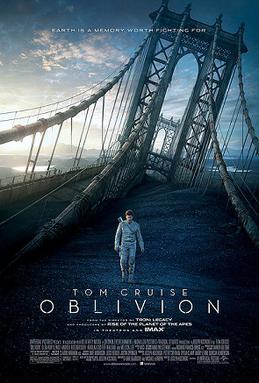
A film about being given a history instead of having one, and about how little difference that makes from the inside.
In Oblivion, Jack and Victoria have had their memories wiped and replaced with a cover story, and they go about their work maintaining equipment on a ruined Earth with every appearance of ordinary contentment.1
The wipe is not what the film is really about. What it is about is that the replacement works. Jack is not pretending to believe his history. He has no access to anything that would let him doubt it. His sense of duty, his affection, his idea of who he is loyal to — all of it is real to him, all of it was written by somebody else, and no amount of sincerity on his part can tell the difference.
What finally cracks it is not reasoning. It is a scrap of unauthorised memory that refuses to stay down — a cue, arriving uninvited, that does not fit the story he was given.
The 6th Day: both of them have an equal claim
The 6th Day (2000)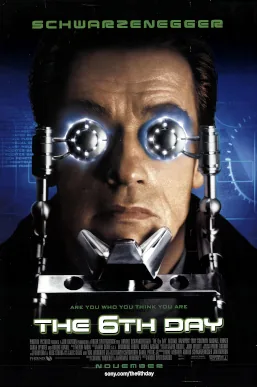
A blunter film, asking a sharper question: what happens to identity when memory turns out to be copyable.
The 6th Day is a blunter film, and it asks a sharper question.2 A man's memories are recorded, then written into a clone. Now there are two, and both of them remember the wedding. Both remember the daughter. Neither is lying, and neither is mistaken.
The film reaches for an action-movie answer, which is fair enough. But the problem it poses survives the ending. Every account of identity that leans on continuity of memory has to say something about what happens when there are two copies, and most of them say something unconvincing.
Moon: the quiet version
Moon (2009)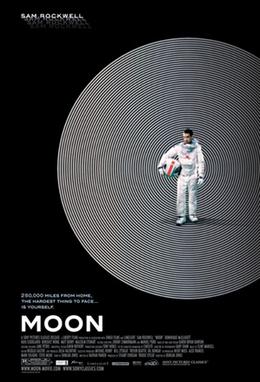
The same idea done quietly, which turns out to be much worse. If you have not seen this one, it is the one to protect.
The same idea, done softly, is far worse.3 In Moon, Sam Bell is alone at a lunar mining base, finishing a three-year contract and looking forward to going home to his wife and daughter. Then he meets Sam Bell.
There is no villain in the room, no chase. Just two men with one life between them, each carrying the same memories of the same kitchen, discovering together that the memories are issued equipment — a recording, installed, to make a worker content enough to finish a shift.
It is the most upsetting of these films precisely because nobody shouts. The cruelty is administrative.
Severance: the split made voluntary
Severance (2022)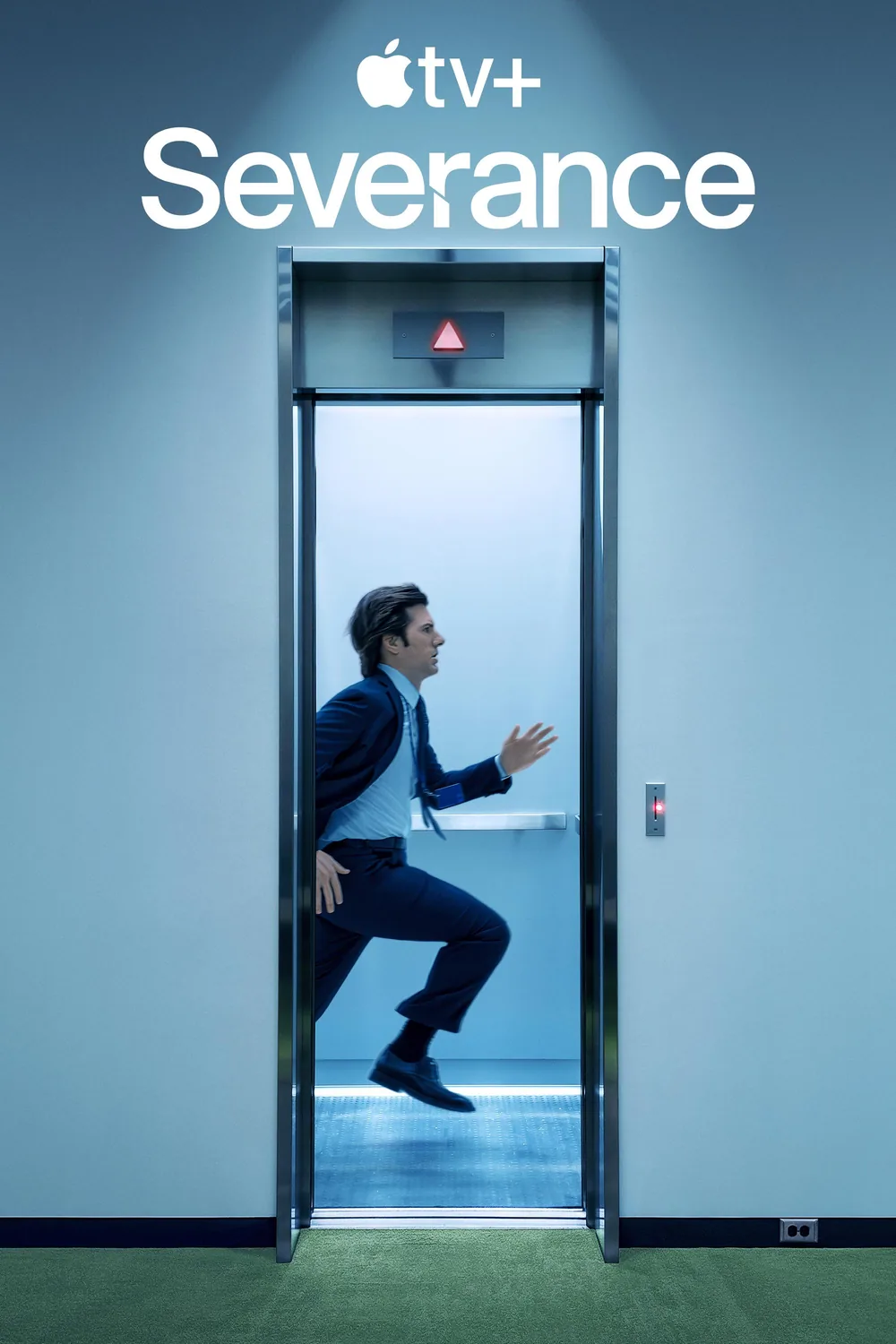
The premise again, with one change that makes it new: here the division is consented to.
Severance takes the premise and does something genuinely new with it: the division is consented to.4 A procedure separates work memories from the rest of a life, so that the person who goes to the office and the person who goes home never meet, share a body, and know almost nothing of each other.
Which raises the question the earlier films step around. The person at work has memories, preferences, loyalties, and a life measured entirely in office corridors. They are not a copy of anybody. They are a person who was brought into existence by a filing decision, and who cannot leave.
The outside self agreed to it. The inside self was never asked, and could not have been, because they did not exist until the question had already been answered.
The uncomfortable part: this is not only fiction
It would be comfortable to file all of this under science fiction. The research does not allow it.
In 1995, Elizabeth Loftus and Jacqueline Pickrell showed that a reasonable proportion of people could be led to remember a childhood event that never happened — being lost in a shopping mall — after a relative simply mentioned it as fact.5 Not vaguely. People supplied details, emotions, and corrections to the account they had been given. Later work by various groups has implanted other events, some of them considerably more serious.
It is easier to do than anyone would like, because remembering is not playback. Each recall is a reconstruction, assembled from fragments and expectations — and the evidence suggests that a memory is briefly editable at the moment it is recalled, and is then written back down in its new form.6 You are not consulting an archive. You are redrawing a picture from a sketch, and then keeping the redraw.
Which means the gap between us and the people in these films is narrower than it looks. Nobody installed your childhood. But it has been revised, repeatedly, by retelling, by other people's versions, by photographs you have seen so often that you can no longer tell whether you remember the day or the picture.
Why this argues for writing things down
If memory drifted at random, nothing could be done about it. It does not drift at random: it drifts toward the story, the version you have told most often, the version that fits what you now believe about yourself and everyone in it.
The only real defence is a record made at the time, by somebody who was there, before the smoothing starts. Not because a record is perfect — it is partial and biased too — but because it stops moving the moment it is written, and your recollection never does.
The people in these films have no such record, which is exactly why they can be told anything. You have the option.
References
- Oblivion (2013). Directed by Joseph Kosinski. Universal Pictures.
- The 6th Day (2000). Directed by Roger Spottiswoode. Columbia Pictures.
- Moon (2009). Directed by Duncan Jones. Sony Pictures Classics.
- Severance (2022–). Created by Dan Erickson. Apple TV+.
- Loftus, E. F., & Pickrell, J. E. (1995). The formation of false memories. Psychiatric Annals, 25(12), 720–725.
- Nader, K., Schafe, G. E., & LeDoux, J. E. (2000). Fear memories require protein synthesis in the amygdala for reconsolidation after retrieval. Nature, 406(6797), 722–726.